
Running a Sex Offender Check in Archer County
The first official channel is the Texas Public Sex Offender Registry, which the Texas Department of Public Safety maintains under Code of Criminal Procedure Chapter 62. Choose Archer in the county control to focus on registrations tied to Archer County. A name search is useful when the person is known. Address, city, ZIP, and map tools are better for community awareness around a home, school route, park, or other place. Search both current and broader results when the controls allow it, since a narrow setting can hide a record that still matters to the question.
No verified stand-alone Archer County registry list appears on the county site. That makes the DPS system the public search point, while the registering authority is the local follow-up point. City residents report to their municipal police department. Rural Archer County residents report to the Archer County Sheriff. Start with enough detail to avoid a false match, such as a full name, approximate age, known city, or address. Then open the profile instead of treating the result card as the whole record.
Archer County Sex Offender Registration Route
The right local office depends on where the registrant lives. Texas assigns city residents to municipal police and residents outside a municipality to the sheriff. In Archer County, this split matters because Archer City, Holliday, and Lakeside City each have a municipal police structure, while the sheriff covers rural areas. The public DPS record is the shared search layer, but it does not turn one local office into the registration authority for every address.
For a rural address or a question about which authority serves it, contact the Archer County Sheriff's Office. The office is at 100 Law Enforcement Way, Archer City, TX 76351, and its published number is 940-574-2571. For an address inside a city, begin with that city's police department. If the boundary is unclear, give the exact street address and ask which agency owns the registration file before reporting an apparent lapse.
Note: A registry search result does not replace direct confirmation from the police department or sheriff responsible for the listed address.
Searching the Texas Public Sex Offender Registry
DPS provides several ways to search the Texas Public Sex Offender Registry. The tabs separate popular, name, address or city, map, and advanced approaches. For an Archer County sex offender check, the county filter is often the cleanest starting point. A person-specific search calls for a last name or initial, while an address search can narrow the results to a street or ZIP. Read the portal conditions before using the data.
Advanced controls include start and end dates plus Primary Only and Current Only options. Submit runs the query and Clear resets it. If a tight search returns nothing, remove one optional filter at a time. A broad result set can then be narrowed by public identity and address facts.
- Open the official DPS registry and review its conditions of use.
- Select name, city, county, address, map, or advanced mode. Choose Archer for a county search.
- Compare the returned name, photo, physical details, and location before deciding whether a result matches.
- Open the full profile. Check the offense, status, risk label, registration term, and public address details together.
| Field Label | Type | Required | Notes |
|---|---|---|---|
| Search mode | Tabs | Yes | Popular, Name, Address-City, Map, or Advanced |
| Last name or initial | Text | For name mode | Use other details to resolve similar names |
| City name | Text | For city search | Enter an Archer County city |
| County | Dropdown | For county search | Select Archer |
| Street, ZIP, address type | Controls | No | Narrows an address or area search |
| Date and status options | Dates and checkboxes | No | Start/end date, Primary Only, and Current Only |
Archer County Registry Tools in View
The official screens help explain why one Archer County sex offender search may need more than one mode. The DPS registry interface presents the Texas search controls used to focus on Archer County.
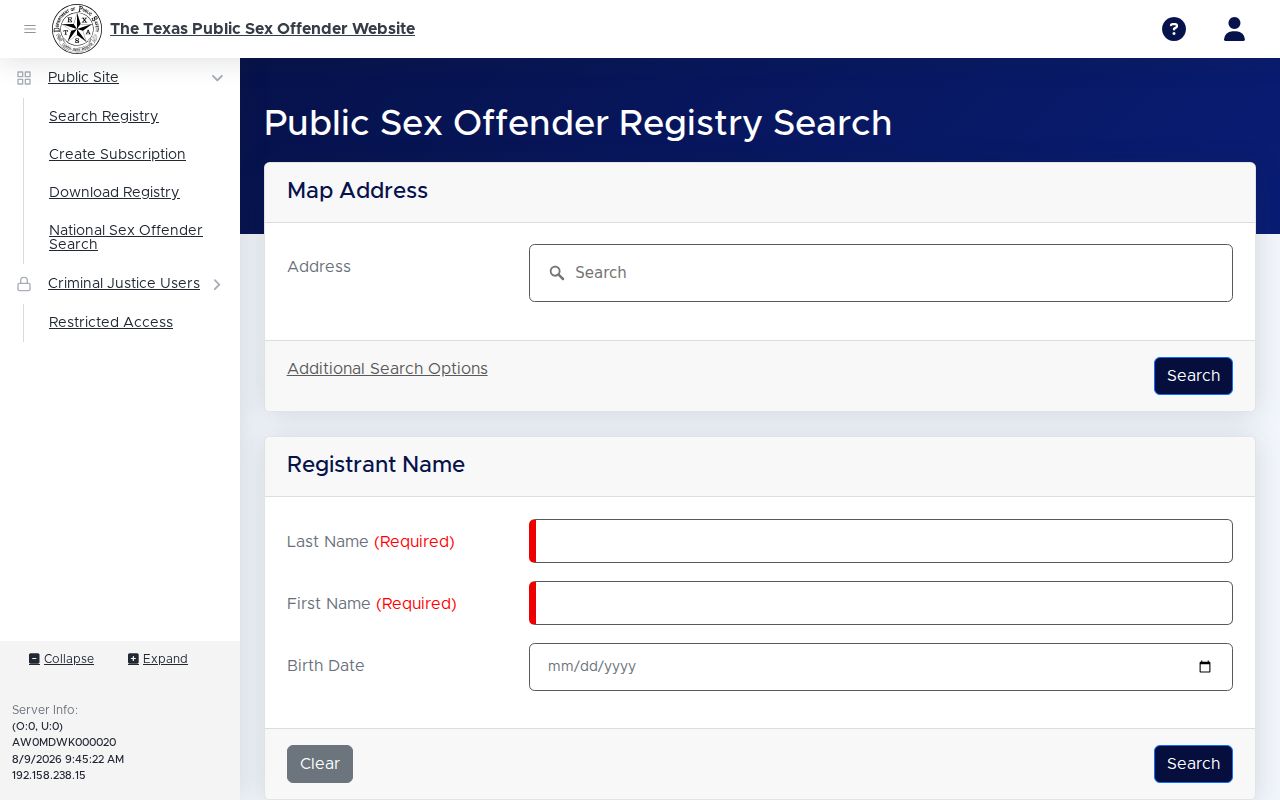
The screen shows that county, name, location, and advanced searches are distinct paths, so the best control depends on the fact already known.
The DPS registration-program page supplies the state context behind Archer County registry entries.
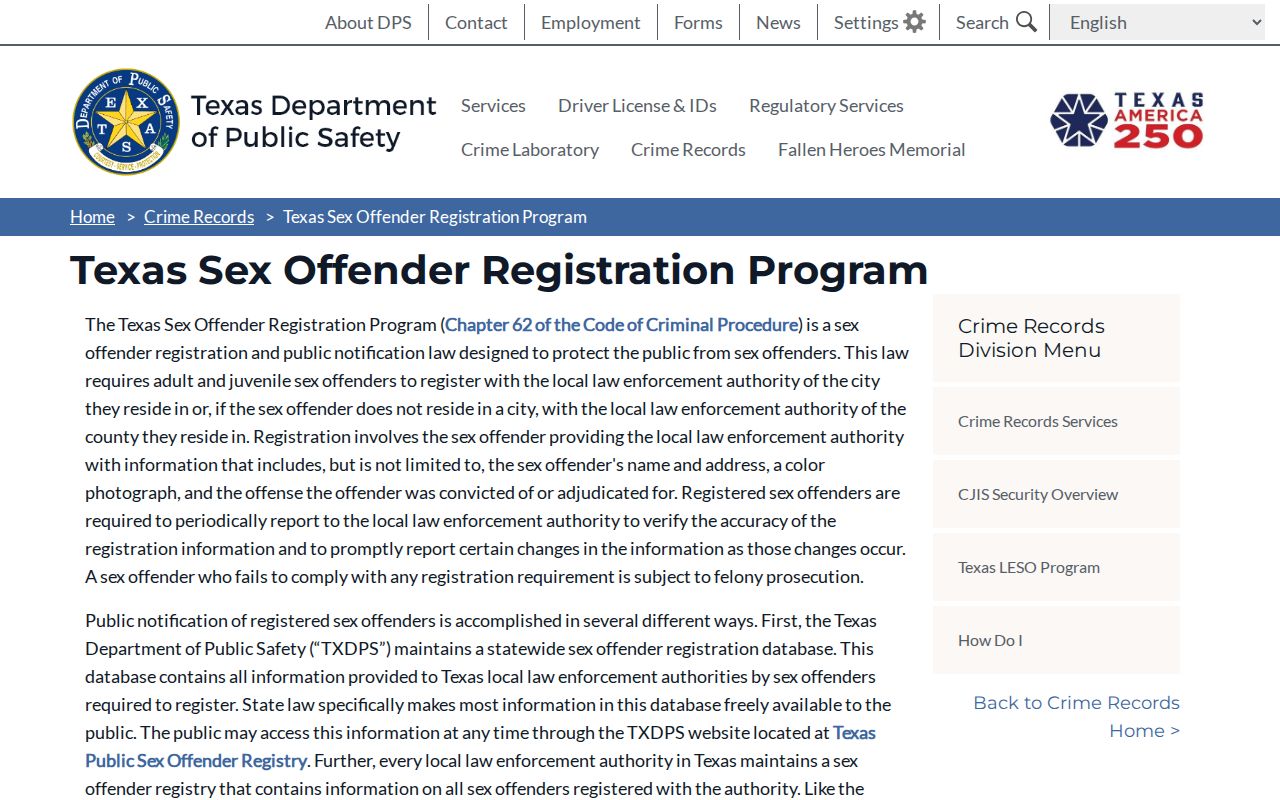
That program material is the sound source for registration duties and public-notification rules, rather than assumptions based only on a search result.
For people or addresses with ties outside Texas, the Justice Department's National Sex Offender Public Website adds a cross-state search layer.
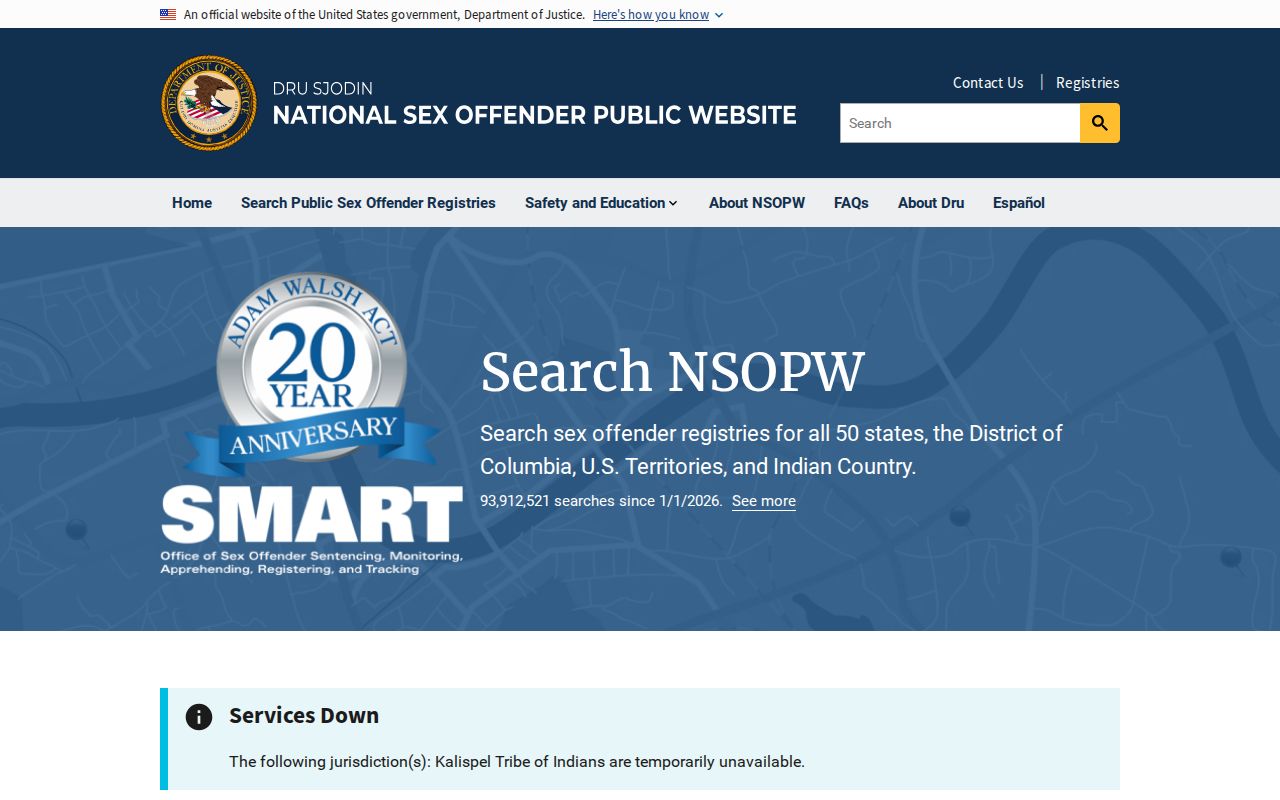
NSOPW broadens geographic coverage, while the Texas profile and Archer County registering authority remain the key sources for local details.
What a Registry Profile Shows
A public Archer County registry profile joins identity, appearance, location, offense, and compliance data. It may show a photograph, aliases, birth date, sex, race, height, weight, hair and eye color, and identifying scars, marks, or tattoos. The public location and offense fields help explain why the person is listed. Status and term fields show whether the duty is current and whether the projected end is a date or lifetime. These fields should be read as one record. A shared name by itself is weak identification.
Some profiles may also include a State Identification number and releasable school or vehicle information. Compare the profile's own fields rather than relying on an old screenshot or copied list. The DPS record is the official public display for the Texas registry.
| Name & Aliases | Published name and alternate names used to distinguish the listed person |
|---|---|
| Photo & Physical Description | Photo, birth date, sex, race, build, hair, eyes, and identifying marks when public |
| Registered Address | Public residence or location information allowed by Chapter 62 |
| Offense & Statute | Reportable offense, legal citation, conviction date, and public victim-age category |
| Risk Level | Texas Level 1, 2, or 3 assessment, or civil-commitment designation |
| Registration Status | Compliance information, registration term, projected ending or lifetime duty, and SID |
Archer County Registry Profiles Have Limits
Public access has firm boundaries. The profile does not publish a Social Security number, driver's-license number, phone number, online identifier, victim identity, employer contact or identity, or data reserved for DPS. School and vehicle fields appear only when the law permits their release. Juvenile registration data can also be restricted. A blank field therefore does not prove that no information exists. It may mean the item is not public.
The registry also is not a live account of a person's conduct. It records a legal registration duty and the data that Chapter 62 permits DPS to publish. It cannot establish that a person has committed a new offense, entered a place, or contacted anyone. For a suspected current crime or emergency, use the proper law-enforcement channel rather than drawing a conclusion from the profile.
Registration Requirements and Levels in Texas
Texas risk labels and registration terms answer different questions. Level 1 means low risk, Level 2 moderate risk, and Level 3 high risk; civil commitment is a separate designation. Those labels are not federal SORNA tiers and do not set one fixed term for each row. Duration depends on the offense and governing law. Adults generally register for ten years after discharge or for life. Juvenile duty is generally ten years after disposition, release, or termination, subject to exceptions. Verification frequency also turns on legal status and history.
Most verification is annual. A person with two or more reportable convictions generally verifies every 90 days, while civil commitment generally calls for verification every 30 days. The table keeps risk, term, and frequency separate because combining them into one tier label would misstate Texas law.
| Texas category | Duration | Verification Frequency |
|---|---|---|
| Level 1, low | Offense-based: adults generally ten years after discharge or lifetime; juvenile duty generally ten years, with exceptions | Usually annual; every 90 days for two or more reportable convictions |
| Level 2, moderate | ||
| Level 3, high | ||
| Civil commitment | Governed by the applicable lifetime duty and orders | Every 30 days |
Archer County Sex Offender Community Notice
DPS uses community postcards when a high-risk or civilly committed person moves into a community. This notice is distinct from a routine search. A person checking an Archer County address should still use the public registry because the search can show current public details without relying on whether a postcard reached a given household. The registry's status and location fields matter more than an old notice kept in a drawer.
Texas does not turn public notice into permission to monitor, follow, confront, or contact a registrant or household. Use the data to plan normal personal and family safety steps. If a profile appears wrong, stale, or inconsistent with an observed address, record the exact public field and contact the responsible city police department or Archer County sheriff. Do not attempt a personal verification visit.
NSOPW Extends an Archer County Check
NSOPW searches public registry information from participating jurisdictions across the country. It is useful when a known person has lived outside Texas, when an address near a state line raises a broader question, or when a name search in DPS returns no clear match. Search spelling and identity details still matter. National coverage does not make each participating state's rules or public fields identical.
For an Archer County result, return to the DPS profile for Texas-specific status and then to the correct local registering authority for a compliance concern. NSOPW is the wider lens, not a replacement for the Texas record. That two-layer method reduces the chance that a move across state lines or a narrow county filter will end the search too soon.
Lawful Use and Community Notification
Chapter 62 makes most registration information public for safety and awareness while protecting listed private fields and victims. Public access carries no permission to punish, shame, exclude, or investigate a person on one's own. Keep the search tied to a lawful purpose, such as learning about the area around a family activity or checking a public notice. If there is an immediate danger, call 911. For apparent noncompliance, contact the municipal police department for a city address or the Archer County Sheriff's Office for a rural address.
Give the agency the public profile, listed location, and the specific compliance fact that appears inconsistent. Let trained staff assess it. A registry entry does not authorize contact with the listed person, family, neighbors, or property owner.
Registry Misuse Is a Crime: Texas Code of Criminal Procedure Chapter 62 forbids using registry information to threaten, intimidate, harass, or injure a registrant or household. Use Archer County sex offender data only for lawful safety awareness.