
Arrest History in Archer County
The Archer County Sheriff, Archer City Police, Holliday Police, Lakeside City Police, constables, and Texas DPS may create local arrest records. The arresting agency keeps its incident or arrest report. A custodial arrest may also create a jail booking at the sheriff's facility. When prosecutors file a charge, the event gains a separate court record.
An arrest history is not a list of convictions. It may include bookings that ended without charges, allegations later changed by a prosecutor, dismissals, or acquittals. Archer County does not publish a verified date span for its roster, so no online result should be treated as a complete lifetime history.
The most useful first question is narrow: current custody, the officer's report, the booking sheet, or the final court outcome. Each answer comes from a different custodian. A family member checking custody may need only the roster and sheriff phone. Someone reviewing their own old arrest may need the agency report, UCMS case number, certified clerk disposition, and DPS fingerprint review to see whether all four systems agree.
Warrants are another separate layer. UCMS Smart Search can include warrants and filter by warrant type, status, and issued dates. Archer County has no confirmed stand-alone sheriff warrant list. An online hit should be verified with the issuing clerk because an unexecuted or sealed warrant may not be public and status updates can lag. The sheriff can address current execution or custody questions, while the court confirms the case number and legal status.
Four Archer County Arrest Records
One Archer County arrest can produce four related files. The arresting agency writes the offense narrative. The sheriff records booking and custody. Fingerprints and a reportable arrest event go to the Texas Department of Public Safety Crime Records Division. The prosecutor and clerk create the court file if a charge is accepted.
Record flow: Agency Report › Jail Booking › DPS Fingerprint Event › Filed Court Case
A gap in one system does not erase another file. Texas requires reporting for Class B or higher events, while Class C arrest reporting is optional. That is one reason a fine-only local event may not appear in a DPS result.
DPS associates submitted fingerprints and arrest-event data with state tracking identifiers. The clerk later reports the disposition. DPS warns that a statewide record can be incomplete if an agency did not report an event, data was rejected, or the disposition did not post. For self-review, fingerprint comparison is the identity-safe route. A name result is less certain and should be checked against the originating Archer County record.
How to Look Up Archer County Arrests
No one Archer County database answers every arrest question. Use the current roster for custody, the sheriff or police agency for the arrest report, UCMS for a filed case, and DPS fingerprint review for your own statewide record. Keep the booking, incident, and case numbers because each custodian may use a different identifier.
- Follow the Current Jail Roster link from the official sheriff page. It is the first check for present Archer County custody.
- If the roster redirects, blocks access, or misses a new booking, call 940-574-2571. Ask for custody status or a booking sheet using the full name and arrest date.
- Request the arrest narrative from the arresting agency. Include the incident number, date, time, place, exact record, and preferred delivery format.
- Search the UCMS portal for the filed charge, then verify the disposition with the district or county clerk.
- For your own statewide history, use DPS FAST fingerprint review. Use a focused written request under the Texas Public Information Act when an agency's online path is absent.
The public DPS Conviction Name Search is aimed at conviction and deferred-adjudication information reported to the state, not every local booking. The current portal uses one $1 search credit, with published card transaction charges. The offline CR-42 name request is $10 per name. For a person's own record, FAST fingerprint review costs $15 plus the $10 collection fee stated by DPS. Fees can change, so confirm them at the official channel before paying.
If the state record lacks a disposition, first obtain a certified outcome from the Archer County clerk that handled the prosecution. Compare identifiers, including the tracking control or SID when available, rather than matching by name alone. DPS provides a correction process for a person's own history. The clerk cannot change a jail record, and the sheriff cannot change a court judgment, so send any correction evidence to the custodian responsible for the inaccurate field.
A written Texas Public Information Act request works best when it seeks a known record instead of asking an agency to answer questions or conduct research. Ask for the booking sheet, basic offense report, arrest report, warrant and affidavit after execution, or another named item. State whether electronic delivery is acceptable. Request a cost estimate if the office expects charges, because Archer County did not publish a sheriff-specific fee table. Keep proof of submission and the office's response so later follow-up refers to the same request.
When Archer Arrest Rosters Block
The sheriff's official roster target redirects through Kologik vendor infrastructure. Research access returned a 403 response, and the county does not publish its exact fields, update interval, or history span. That technical limit should not be filled with guessed profile details.
The Sheriff's Office page remains the stable entry point.
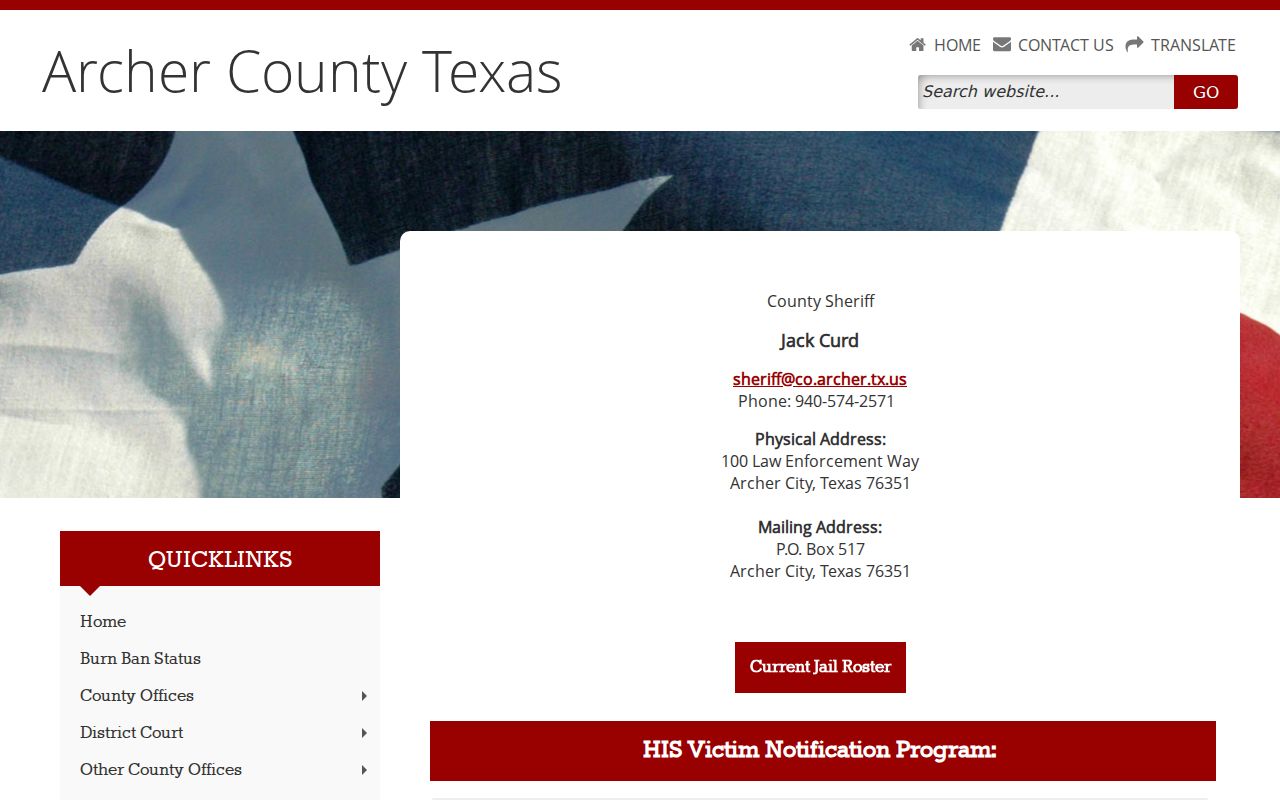
When the roster fails, phone confirmation and a focused booking-record request are the dependable Archer County fallbacks.
Archer County Sheriff and Jail
100 Law Enforcement Way
Archer City, TX 76351
940-574-2571
sheriff@co.archer.tx.us
Ask whether the person is presently held, transferred, or released. If the goal is a document, describe it precisely. A booking sheet and an arrest narrative are not the same file. The sheriff may hold the first even when Archer City, Holliday, Lakeside City, or DPS holds the second. Confirm email acceptance by phone because the county publishes the sheriff email but no dedicated records-request form or local fee schedule.
What an Arrest Record Shows
A request may seek the incident number, arrest date and place, arresting agency, legal basis, alleged offenses, booking number, magistration, bail, and release. Access varies by custodian and case status. The Archer roster's display fields were not verified, so this inventory describes records a requester may ask the proper office to locate.
| Booking Number | Links the jail intake to custody records. |
|---|---|
| Booking Date & Time | Shows when intake occurred, not when a court resolved the charge. |
| Arresting Agency | Identifies the office that holds the offense or arrest narrative. |
| Charges | Lists booking allegations, which may differ from filed or final charges. |
| Bond | Shows a set amount or release condition when recorded; it may change by court order. |
| Mugshot Policy | No Archer-specific blanket release rule was published. Texas law regulates commercial republication but does not ban all official release. |
| Release Status | Indicates current custody or release, not guilt or case outcome. |
Photographs, fingerprints, and probable-cause narratives can face different release limits. Active-investigation material, juvenile information, victim data, driver-license details, and body-camera footage may be withheld or redacted under specific rules. Texas Business and Commerce Code Chapter 109 regulates businesses that publish criminal-record information, including booking photographs. It is not a blanket rule that every official mugshot must be public.
Archer County Arrest Agency Routes
Ask the office that made the arrest for its report. Archer City routes requests through City Hall at 118 S Sycamore, 940-574-4570. Holliday Police is at 110 W Olive, 940-586-1566, during weekday business hours and directs after-hours needs to the sheriff. Lakeside City routes police-record questions through city hall at 4344 SH 79 S, 940-691-6603. No dedicated online arrest-report form was confirmed for these cities.
For a written request, name the exact existing record and include the incident number, date, approximate time, location, known subject, and desired format. The Texas Public Information Act permits law-enforcement exceptions for active work and protected details. Ten business days is tied to an attorney-general ruling request, not a promise that the record will be produced within ten days.
Body-camera requests have an extra identification rule under Texas law. State the date and approximate time, a specific location, and one or more known subjects. A crash report follows a different path through TxDOT CRIS and costs $6 for a regular copy or $8 for a certified copy under the researched schedule. Do not send a crash request to the ordinary sheriff open-records route when the official CRIS purchase system holds it.
Texas law allows an agency to withhold parts of an active investigation, but basic arrest information may follow a different disclosure analysis from the full narrative. Ask for separable public portions when the complete file cannot be released. Juvenile details, abuse information, personal identifiers, and victim data may also be protected. A redacted response does not mean the arrest never occurred; it means the custodian applied an access rule to part of the record.
Recent Arrests and Booking Logs
Archer County publishes a Current Jail Roster entry point rather than a separate verified booking blotter, arrest log, Most Wanted page, or sheriff app. Use it for current custody. Call the sheriff when a redirect or new booking makes the online result uncertain. A booking sheet request can then establish the intake record.
A roster is not a full arrest history. A person may have been released, transferred, cited without a county booking, or arrested by an agency whose narrative remains outside the jail system. Search UCMS for a later case and ask the clerk for its disposition. Do not republish booking photos or assume that an image proves a conviction.
Archer County also does not publish a verified jail capacity, housing-unit breakdown, visitation schedule, phone vendor, deposit channel, or mail format. Call 940-574-2571 for current operating rules. Generic booking steps may include identity and property intake, fingerprints and a photograph, medical and security screening, classification, magistration, and either release or continued detention. Those steps are general Texas custody context, not a claim about every Archer booking.
Texas requires magistration without unnecessary delay and no later than 48 hours after arrest. The magistrate gives required warnings and considers bail. Separate provisions address a person held after a warrantless arrest when probable-cause and bond steps are delayed, generally using 24 hours for a misdemeanor and 48 hours for a felony, subject to statutory exceptions. These time rules describe safeguards, not a promised Archer County release time. Other holds, warrants, and court orders can affect custody.
Archer Arrest Custody Systems
Custody location changes the search. The Archer roster and sheriff phone cover local pretrial or short-term custody. The TDCJ Online Inmate Search covers sentenced Texas prisoners and searches by name, SID, or TDCJ number.
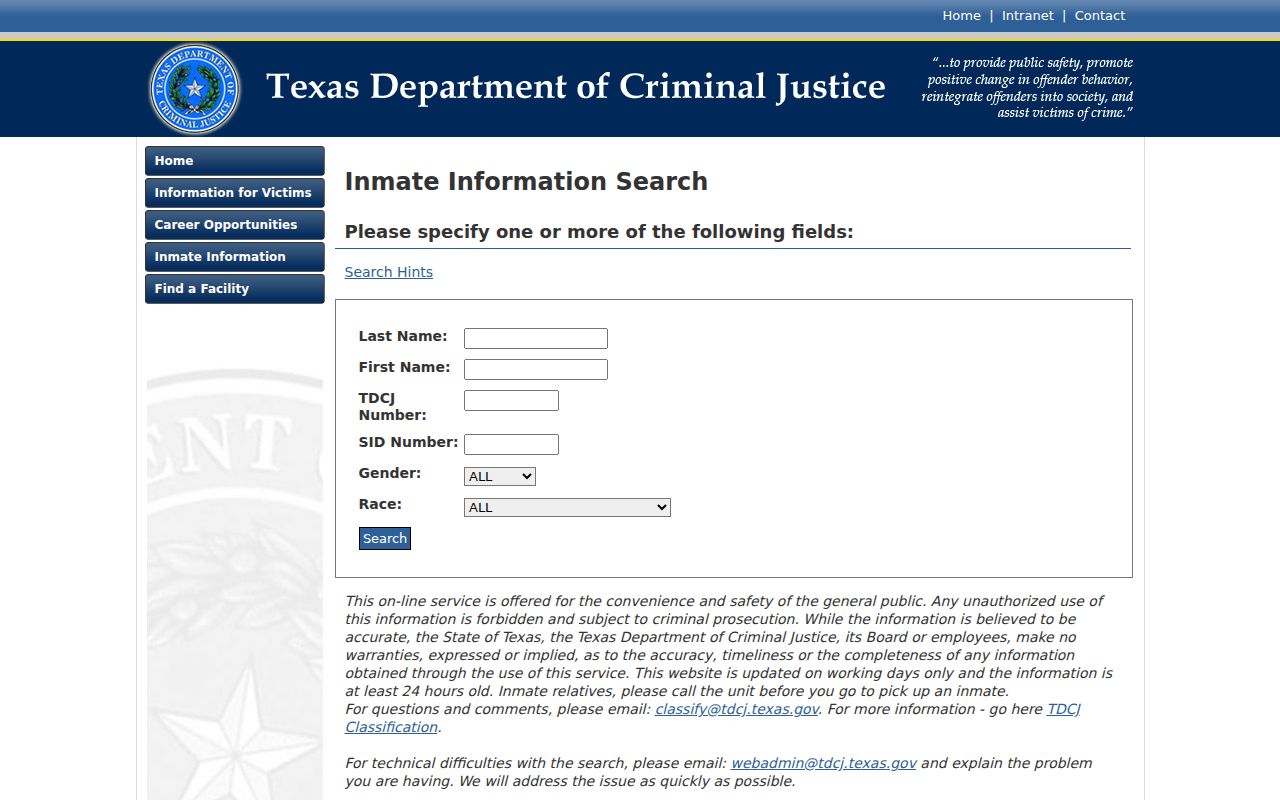
A TDCJ result concerns state custody, not a current Archer County jail booking.
VINELink Texas provides custody-status notifications.

Notification is useful after transfer or release, but the originating clerk still holds the case outcome.
The Federal Bureau of Prisons locator is the federal path.
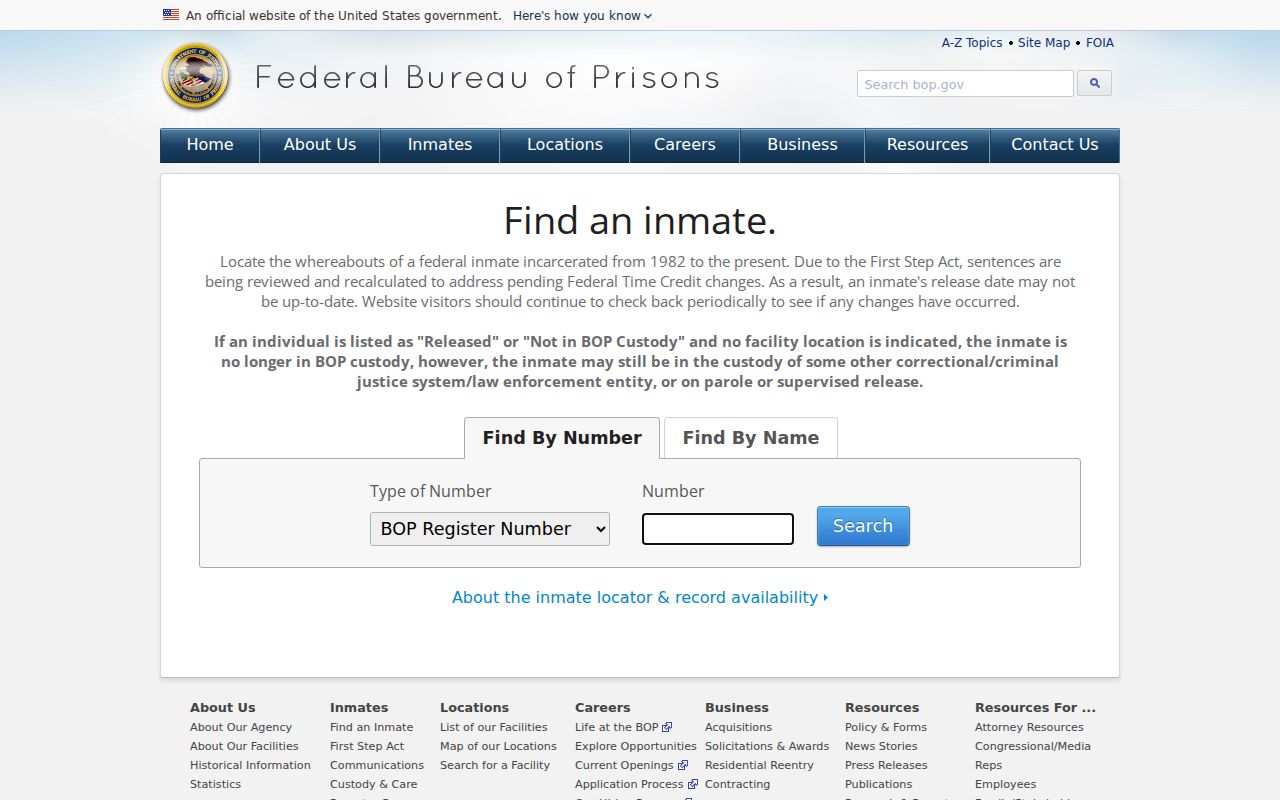
A federal result does not establish state or Archer County custody.
TDCJ can also respond by email with location, offenses, court and county, and projected release when enough identifying data is supplied. A release label in the federal locator does not rule out later Texas or local custody. Search each system only for the custody level it covers, then return to the Archer County clerk if the goal is the court disposition rather than a person's present location.
Archer Arrest Supervision Records
Probation and parole are different. Archer County participates in the 97th Judicial District Community Supervision and Corrections Department. A sentencing docket or judgment can show a community-supervision grant, while operational supervision files may be restricted.
The TDCJ Community Justice Assistance Division oversees county CSCD standards and funding.

This state oversight page does not replace the Archer case judgment.
The Texas Board of Pardons and Paroles makes parole decisions, while TDCJ supervises people released to parole or mandatory supervision.
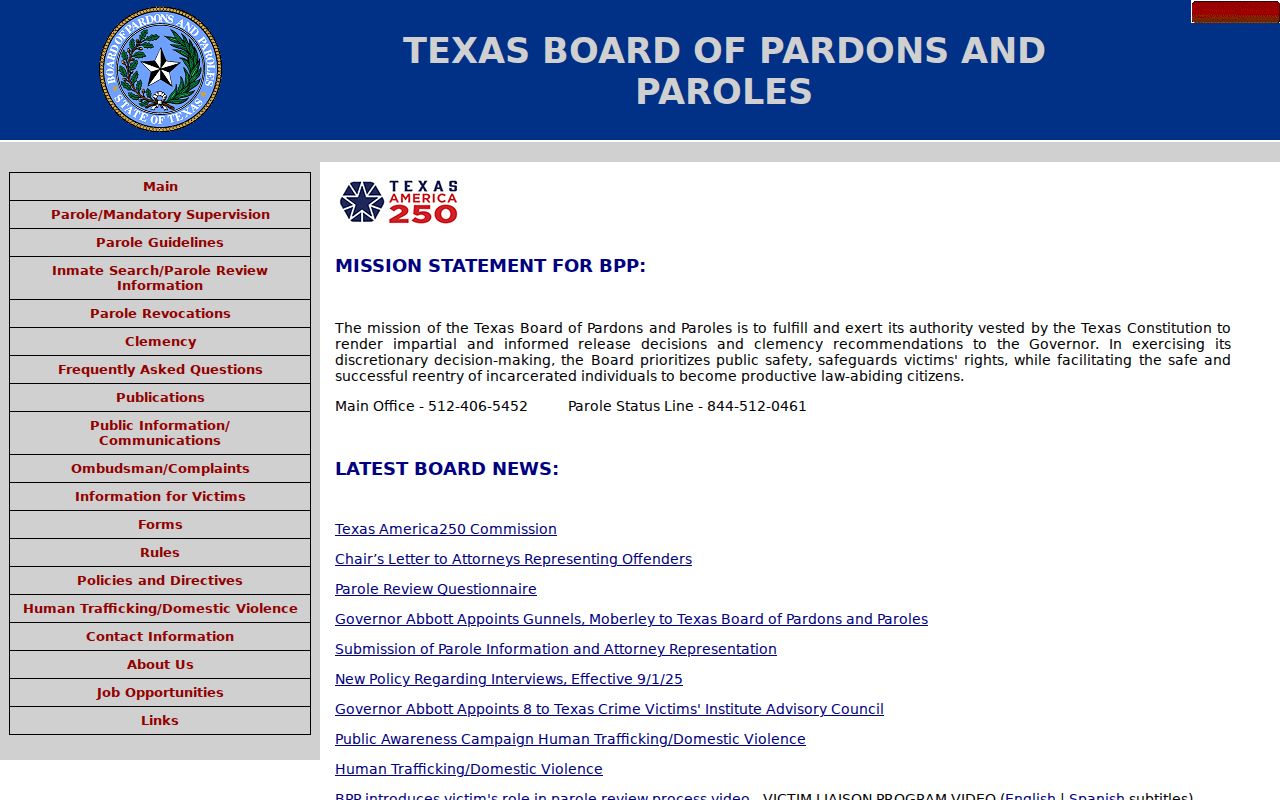
Parole follows a prison sentence and should not be inferred from an arrest entry.
The 97th CSCD uses an Archer City mailing address and the published phone 940-574-4997. TDCJ's Wichita Falls District Parole Office serves Archer County from 3100 Seymour Highway, Suite 118, at 940-322-2721. Contact supervision offices only when the court judgment or TDCJ record shows that channel applies. An arrest search alone cannot establish probation, parole, or the terms of either.
A motion to revoke community supervision or adjudicate deferred supervision may create new docket entries and a warrant in the court file. If that event leads to custody, the jail record describes the booking while the clerk file describes the alleged violation and judicial outcome. For parole, TDCJ and the Board of Pardons and Paroles hold the supervision and decision records. This split repeats the central Archer County rule: custody data and court disposition data remain related but distinct.
Arrests vs Convictions
An arrest record documents custody or an enforcement event. A conviction record documents a finding of guilt in court. In Archer County, the sheriff or arresting police agency creates the former, while the clerk's judgment and the DPS criminal-history repository reflect the latter. Charges may change between those steps.
| Arrest Record | Conviction Record |
|---|---|
| Created by the arresting agency or jail | Created through the court and reported by the clerk |
| Proves an arrest or booking was recorded | Proves the court entered a guilty disposition |
| Lives with the agency and sheriff booking system | Lives with the clerk and may flow to DPS |
| May end in release, no charge, dismissal, or acquittal | May lead to sentence, appeal, expunction, or nondisclosure when law permits |
Note: An Archer County arrest is not proof of guilt; verify the filed charge and final disposition with the proper court clerk.
A qualifying arrest may later be subject to expunction under Texas Code of Criminal Procedure Chapter 55A, but eligibility depends on the event and statutory conditions. Dismissal alone does not promise immediate relief. Archer County publishes an unusually useful agency service list naming local custodians, yet that PDF is not a petition or an eligibility ruling. After an order, verify the clerk, the arresting agency, the sheriff, and a DPS fingerprint review rather than assuming one update reached every system.
Texas also uses orders of nondisclosure for some eligible records. Nondisclosure limits ordinary public dissemination while preserving access for authorized agencies; expunction generally requires listed custodians to return or destroy records under the order. These remedies are not interchangeable. Current law moved expunction procedure into Chapter 55A in 2025, so old Chapter 55 forms or citations should not control a new Archer County inquiry.
When comparing records, build a short event timeline. Record the arrest date and agency, the booking number and release, the court cause number and filed charge, and the final disposition date. Mark each fact with its source. This exposes a changed allegation or missing disposition without treating the newest screen as the whole story. It also gives the sheriff, clerk, or DPS correction staff the identifiers needed to locate the right Archer County event.
Keep identity matching just as strict. A shared name is not enough to merge a roster entry, court case, and state record. Use a case or booking number, arrest date, agency, and lawful identifying data from the official files. Fingerprints are the strongest method for reviewing your own Texas record. If two sources conflict, report the mismatch to the office that created the disputed field and provide the certified source that supports the correction.
Finally, release from custody says nothing by itself about prosecution. A person may post bond, receive a personal bond, be transferred, or leave custody before the prosecutor decides the charge. The Archer County court docket and judgment answer what happened next. The sheriff's roster answers where the person is held now. Keeping those questions apart produces a more accurate arrest-history review.