
Criminal Cases in the Archer County Courts
Archer County criminal cases do not all sit in one office. The 97th District Court hears felonies, and its District Clerk keeps the filed pleadings, docket, orders, judgment, and sentence. The constitutional Archer County Court handles Class A and B misdemeanors. Four justice courts and the municipal courts in Archer City, Holliday, and Lakeside City retain their own fine-only matters. The issuing court therefore matters as much as the name being searched.
A booking allegation is not a filed charge. Prosecutors may change or decline it before a court case begins. Start with the level of offense, then confirm the court and case number. The clerk, not the arresting agency, is the custodian of the court case file.
The same name can appear in more than one kind of Archer County record. A magistrate may address warnings and bail before a prosecutor files an information or indictment. A municipal or justice-court matter can also remain outside the district and county court path. Ask which court issued the cause number before paying for copies. That small check prevents a district-clerk request for a city citation or a county-clerk request for a felony indictment.
Jurisdiction also shapes the file. The 97th District Court can record a felony indictment, bond rulings, motions, a plea or trial, and a sentence. The county court file serves the same core role for Class A and B misdemeanors. Justice and municipal dockets focus on fine-only offenses and local ordinances. Magistration can occur in a justice court even when the later prosecution belongs in district or county court, so the first court named after arrest may not hold the final case.
Archer County Criminal Case Levels
The quickest routing clue is the charge grade. A felony points to the district clerk. A Class A or B misdemeanor points to the county clerk. A Class C or ordinance allegation may stay with a justice or municipal court and may never appear as a mandatory DPS event.
| Case level | Archer County record holder | Contact |
|---|---|---|
| Felony | 97th District Court and District Clerk | 940-574-4615 |
| Class A or B misdemeanor | County Court and County Clerk | 940-574-4302 |
| Fine-only or magistration | JP 1 through JP 4 | Contact the issuing precinct |
| City ordinance or fine-only | Archer City, Holliday, or Lakeside City Municipal Court | Contact the named city court |
How to Search Case Records
The Archer District Clerk links the UCMS Smart Search. It covers publicly accessible cases in participating UCMS counties and can separate cases, judgments, and warrants. It requires JavaScript, cookies, and a supported browser. A public session may expire after 60 seconds, so record the case number before opening another path.
- Open Smart Search and use a case number when one is known. Otherwise enter the name as Last, First Middle Suffix.
- Expand Advanced Filtering Options. Choose Archer as the location when that dynamic option is available.
- Select Cases, Judgments, or Warrants based on the question. Use filing dates, status, case type, or judicial officer to narrow broad results.
- Record the court, case number, filing date, and current status. Use Hearing Search for a scheduled event, courtroom, or date range.
- Call the correct clerk for docket sheets, document copies, older files, or certification. The public index is not a substitute for a clerk-issued record.
| Field Label | Type | Required | Notes |
|---|---|---|---|
| Record Number or Name | Text | Search basis | Accepts a record number or Last, First Middle Suffix. |
| Location | Dropdown | No | Select Archer when the dynamic list loads. |
| Include Cases, Judgments, Warrants | Checkboxes | No | Each record group can be included separately. |
| Identifier | Text | No | Phone, FBI, sheriff's office, or booking number filters are exposed. |
| File Date and Status | Date/select | No | Narrows results; option lists load dynamically. |
The UCMS Hearing Search adds location, hearing type, judicial officer, courtroom, and from/to dates. It helps locate a setting, not prove the final outcome.
Name searches deserve care. Try the full legal name first, then review reasonable spelling or nickname modes without assuming two similar results identify the same person. A case number is far stronger. If a portal result supplies only an index, give that number to the clerk and ask for the docket, charging instrument, and judgment. Those three records usually establish what was filed, how the case moved, and how it ended.
The warrant filter needs the same restraint. A displayed warrant can be stale, sealed details may be omitted, and portal updates can lag. Verify the issuing court, case number, status, and any written clearance before acting on it. District warrants route to the district clerk, county misdemeanors to the county clerk, and fine-only warrants to the issuing JP or municipal court. The sheriff can address execution or current custody but does not replace the issuing court's record.
Archer UCMS Case Search Controls
The portal's distinct Cases, Judgments, and Warrants controls prevent a common error. A case result shows a filed proceeding. A judgment reflects a court decision. A warrant result concerns court authority to arrest or enforce an order. One does not automatically stand for the other.
The official Archer-linked UCMS screen shows these choices before a private case is opened.
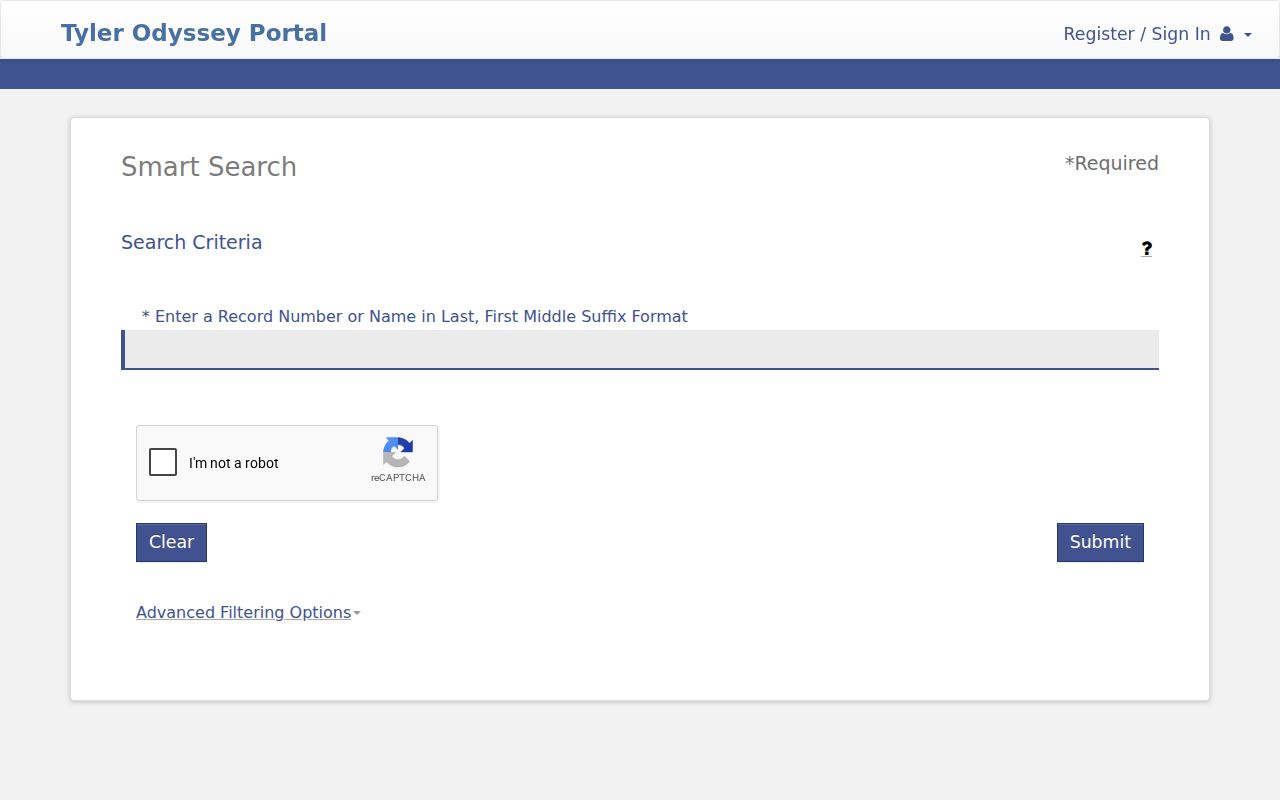
Its filters are especially useful when a common name produces results from more than one participating county.
UCMS is the practical Archer County online channel, but it is not described as a complete search of every Texas trial court. re:SearchTX exists as another state platform, yet official research does not support calling it a comprehensive statewide person search. Searches beyond Archer County should be repeated with the court that would have jurisdiction. Within Archer County, a clerk call remains essential when an older file, sealed status, data lag, or wrong court level could explain the blank screen.
Advanced identifiers can separate similar records. UCMS exposes phone, FBI, sheriff's office, and booking-number fields, but it does not publish a format for each input. Use an identifier exactly as it appears on the source record. Do not invent punctuation or assume an FBI number is the same as a Texas SID. The portal also offers Party, Nickname, Business, and Sounds Like match modes. Broader matching finds variants but creates more false matches, so compare the court, filing date, and case number before concluding that a result concerns the intended person.
What the Case File Shows
An Archer County case file traces what prosecutors filed and what the judge decided. The docket is the chronological index. Read it alongside the charging instrument and judgment because a short status label may not explain whether a count was amended, dismissed, deferred, or resolved after trial.
| Case Number & Court | Identifies the proceeding and the Archer County court with custody. |
|---|---|
| Charging Document | The complaint, information, or indictment states the filed accusation. |
| Docket Entries | A dated index of filings, settings, rulings, and court actions. |
| Hearing Dates | Past and scheduled settings, subject to later changes. |
| Disposition & Judgment | Shows dismissal, acquittal, conviction, or deferred adjudication and the controlling judgment. |
| Sentence & Conditions | Records custody, fine, or community-supervision terms when imposed. |
Archer Criminal Case Clerk Copies
The District Clerk is on the second floor at 100 S Center Street, Archer City, and accepts phone requests at 940-574-4615. The published court-record copy price is $1 per page. No separate certified-copy premium, search fee, turnaround, or office hours were published, so ask for a quote before ordering.
The official District Clerk page supplies the felony records counter and its offline route.
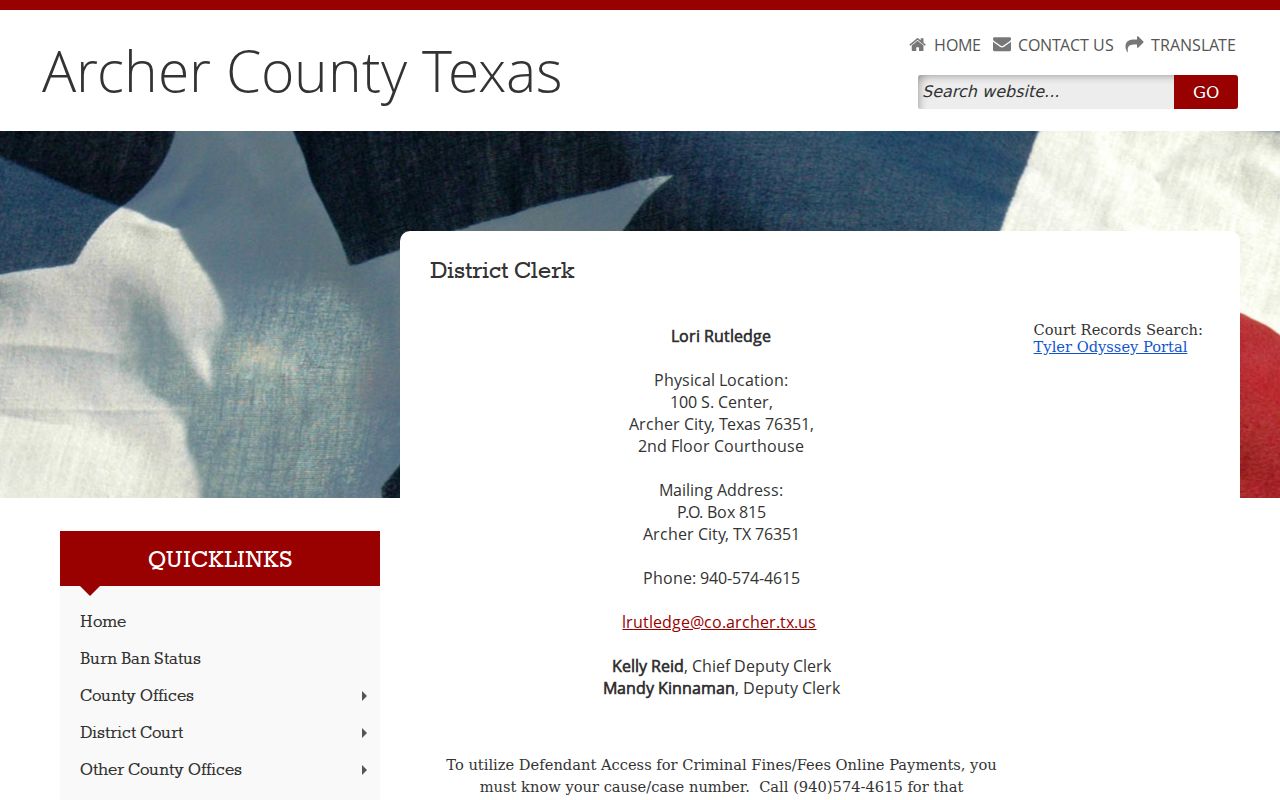
For a certified disposition, give the case number and state that certification is needed.
The County Clerk works at 112 E Walnut, Archer City, with phone 940-574-4302. Hours are Monday through Friday, 8:30 a.m. to 5 p.m., with a noon to 1 p.m. closure and no copies after 4:30 p.m.
The county's clerk page confirms the misdemeanor contact and counter details.
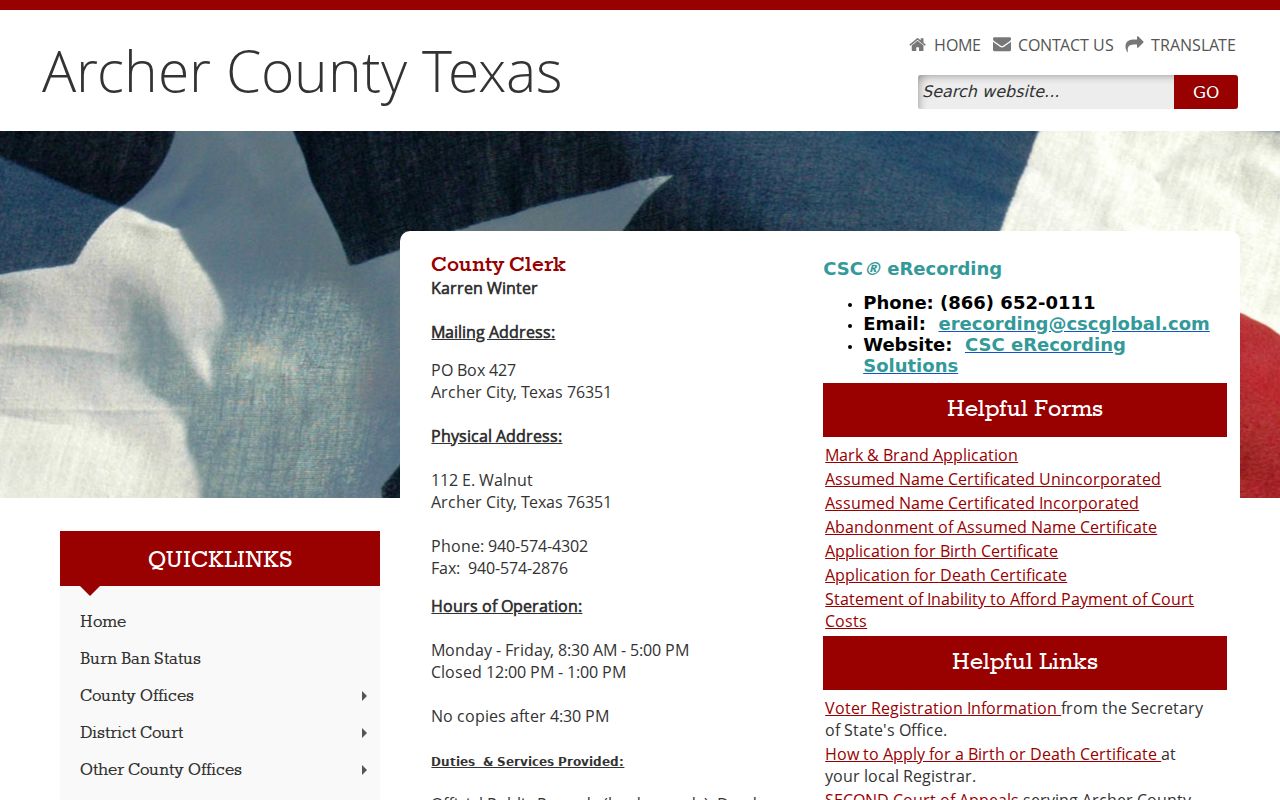
Older or unindexed Archer County criminal cases may require clerk-assisted retrieval rather than another online search.
The historic 1892 courthouse makes that fallback especially relevant. A case-management index can exist even when a scanned document image is not offered to the public. Tell the clerk whether the request is for inspection, an ordinary copy, or a certified copy, and ask whether an archived volume must be retrieved. Do not assume the $1-per-page district rate also states every county-clerk fee or certification charge. Only the district clerk published that specific criminal court copy amount in the reviewed material.
Mail requests should identify the court and cause number, not just a person's name. The District Clerk uses P.O. Box 815, Archer City, TX 76351. The County Clerk uses P.O. Box 427. Ask each office to confirm the page count, total price, accepted payment, and whether a self-addressed return envelope is required before sending funds. No official source reviewed for Archer County supplied a standard turnaround, blanket identification rule, or certified-copy surcharge, so those details must come from the clerk handling the request.
Stages of a Criminal Case
After an arrest, Article 15.17 calls for magistration without unnecessary delay and no later than 48 hours. The magistrate gives warnings and addresses bail. A prosecutor then uses an information for a misdemeanor or a grand-jury indictment for a felony. Arraignment follows the filed charge. Pretrial motions and negotiations may lead to a plea, while disputed cases may proceed to trial.
Case flow: Charges Filed › Arraignment › Pretrial › Plea or Trial › Disposition › Sentencing
Disposition means the way the case ended. Deferred adjudication postpones a finding of guilt while conditions are completed. It is not the same as dismissal or acquittal. The judgment and clerk-certified disposition are the best records for resolving those differences.
- Information
- A prosecutor's formal charging paper commonly used for a misdemeanor.
- Indictment
- A grand jury's felony charging instrument. It is an accusation, not a finding of guilt.
- Deferred adjudication
- A plea-based outcome in which the court defers a guilt finding while conditions are served.
- Disposition
- The recorded way a charge ended, such as dismissal, acquittal, deferred adjudication, or conviction.
Archer 97th District Felony Files
The 97th Judicial District serves Archer, Clay, and Montague counties. Archer filings remain with the Archer District Clerk even though the district justice system spans three counties. That distinction helps when a searcher encounters a district-level office or prosecutor address outside Archer City.
The county's 97th District Court page identifies the local felony court.
Use the Archer location filter and Archer case number before requesting a local file.
The district judge's office and the district clerk serve different roles. The judge's office manages judicial settings and orders; the clerk receives filings and provides record copies. For a docket or certified judgment, call the clerk at 940-574-4615. For court-calendar context, the judge's published office line is 940-574-4940. Neither office should be asked to interpret a disposition as legal advice.
Archer County Federal Case Records
A federal prosecution is not an Archer County court case. Archer County lies in the Wichita Falls Division of the Northern District of Texas. The Wichita Falls courthouse has no full-time clerk staff; paper and mail filings route through the Fort Worth clerk office.
PACER is the federal docket channel.
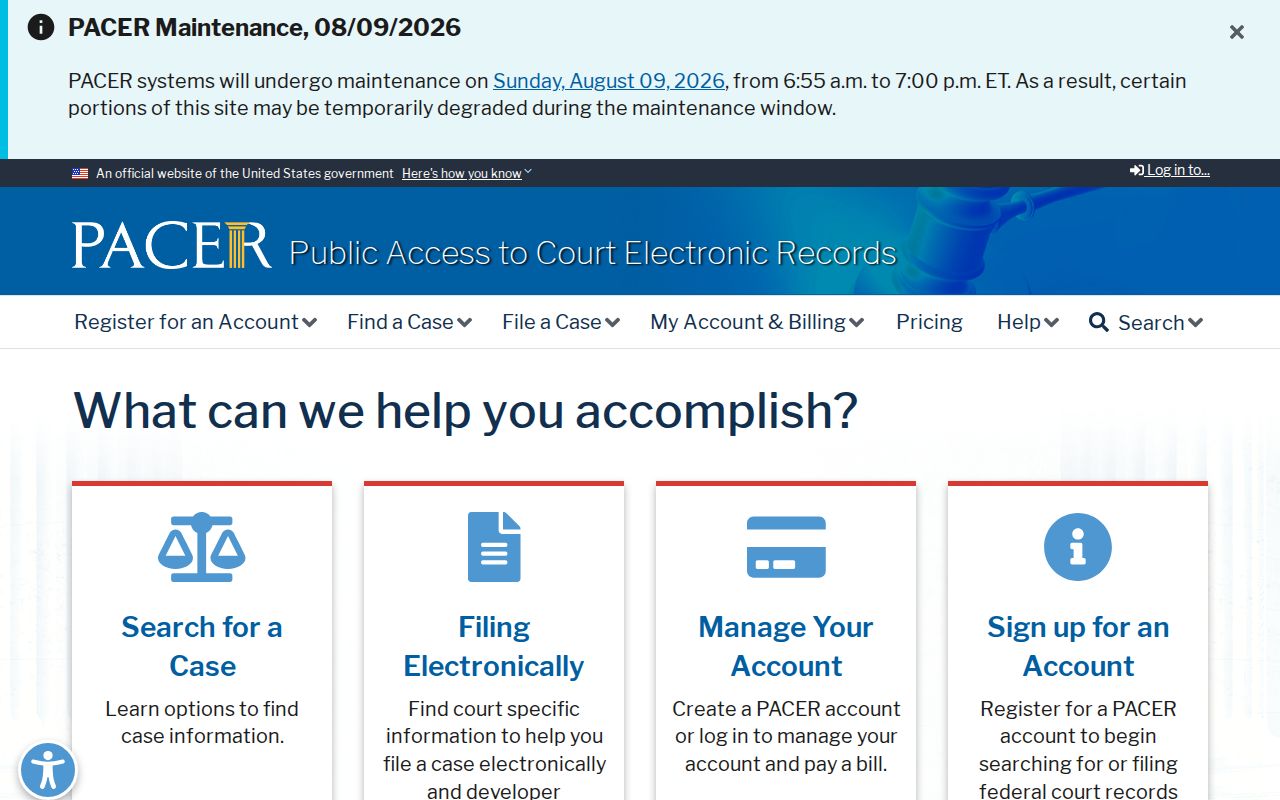
PACER charges $0.10 per page under current pricing, normally caps a case-specific document at $3, and waives quarterly charges of $30 or less.
For a person's own national fingerprint history, the FBI electronic ordering portal is a separate record-review channel.
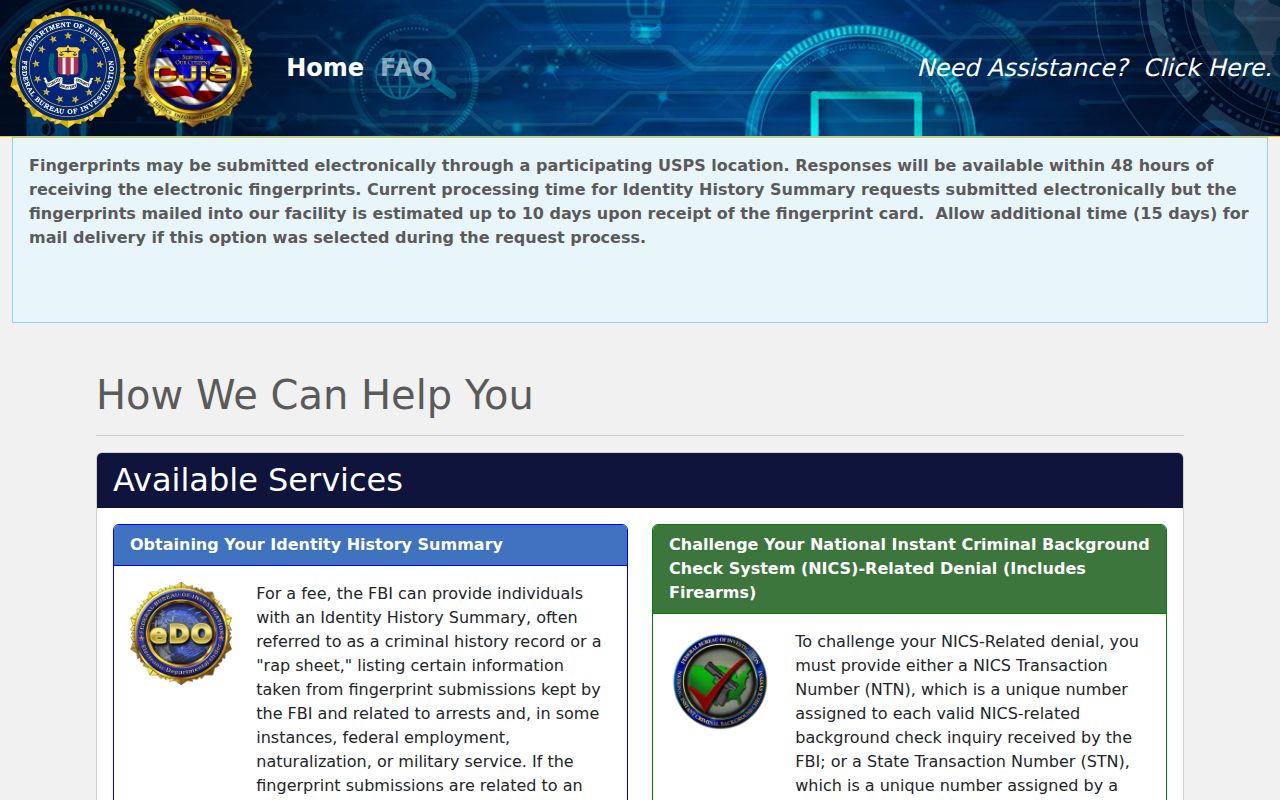
The FBI history is not a substitute for the pleadings and judgment in an Archer County clerk file.
Access & Restrictions
Filed court documents are obtained through the clerk. The Texas Office of Court Administration distinguishes case files from non-adjudicative judicial records governed by Rule 12. A routine Texas Public Information Act request to a law-enforcement agency is not the right route for a pleading filed in a criminal case.
Juvenile material, victim and minor identifiers, financial and driver-license data, sealed warrants or indictments, and records covered by expunction or nondisclosure may be withheld or absent online. A blank result can also reflect spelling, the wrong court level, reporting lag, old paper files, or UCMS coverage. It does not prove that no Archer County criminal case exists.
Texas Code of Criminal Procedure Chapter 55A governs expunction under the current law. Government Code Chapter 411 covers orders of nondisclosure and criminal-history dissemination. These forms of relief differ, and a dismissal does not by itself promise that every public reference disappears. If an Archer County file has been restricted, verify the order with the issuing clerk and review your own DPS fingerprint record for reporting errors.
Public access also does not guarantee that every document appears online. A clerk may provide an inspectable paper file while protecting identifiers in the web view. Conversely, a portal index can remain visible while the underlying document requires a direct request. Ask for the exact item needed, such as the indictment, docket sheet, plea papers, judgment, sentence, or certified disposition. A broad request for an entire file costs more at a per-page rate and may bury the one record that answers the question.
For active cases, schedules and entries can change after a search. Confirm a hearing with the clerk near the scheduled date. For closed cases, rely on the signed judgment instead of a news account, booking allegation, or shorthand portal label. Those practices keep Archer County criminal case research tied to the originating court record and reduce the risk of confusing accusation, procedure, and final result.
Different access laws govern different records. Government Code Chapter 552 applies to governmental records and includes law-enforcement exceptions. It does not turn the sheriff into the custodian of filed pleadings. Court clerks provide documents from specific cases, while Rule 12 addresses non-adjudicative judicial records. Sending the same broad request to every office wastes time and can produce partial, overlapping answers. Route the offense narrative to the arresting agency, the booking sheet to the sheriff, and the indictment or judgment to the clerk.
Juvenile cases receive added protection under Texas Family Code Chapter 58. Sealed warrants and indictments can also remain unavailable until the law allows release. Victim identity, Social Security numbers, financial data, driver-license details, and other protected fields may be redacted even when the rest of an Archer County case file is open. A redaction is an access limit on a field, not evidence that the entire record is false or that the case ended in a particular way.